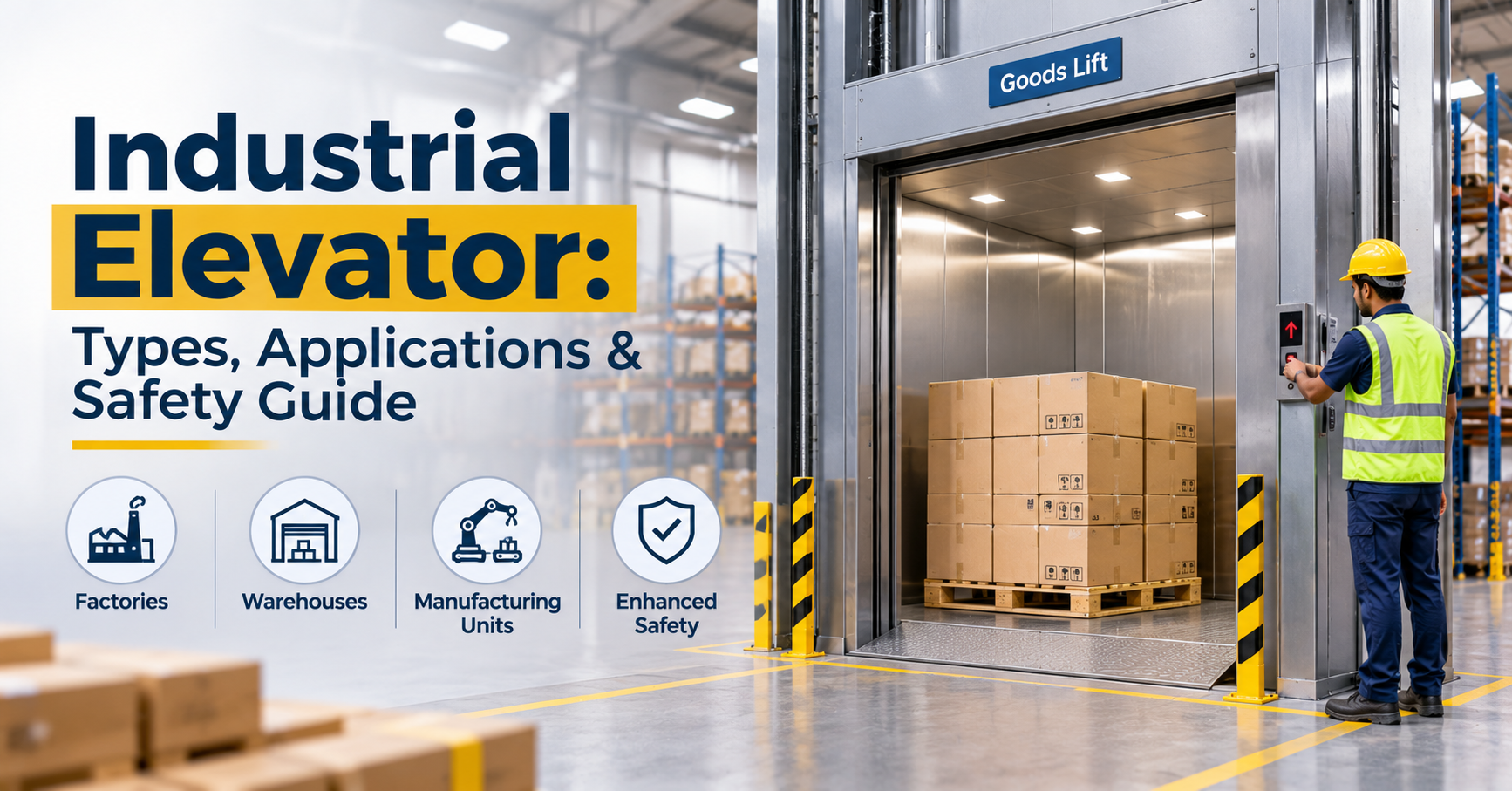
Moving heavy materials between floors is a regular requirement in factories, warehouses, manufacturing units, and industrial facilities. When materials are transported manually or through unsuitable equipment, businesses may face delays, handling difficulties, and workplace safety risks. An industrial elevator provides a practical way to move goods, equipment, and materials between different levels of a building.
An industrial elevator is designed around the operational requirements of a facility, including load capacity, lifting height, usage frequency, and available space. From transporting raw materials in factories to moving pallets in warehouses, the right industrial lift can improve material handling and support smoother operations. Businesses planning a new installation can explore industrial goods elevators to understand the available solutions.
What Is an Industrial Elevator?
An industrial elevator, also called an industrial lift or goods lift, is a vertical transportation system designed for material handling in demanding work environments.
Unlike passenger elevators, which primarily focus on transporting people comfortably, industrial elevators are selected according to the type, weight, size, and movement requirements of goods.
They are commonly installed in:
- Manufacturing plants
- Factories and production facilities
- Warehouses and distribution centres
- Logistics and storage buildings
- Industrial workshops
- Commercial buildings with heavy material movement
Depending on the application, an industrial elevator may transport raw materials, finished products, machinery, spare parts, cartons, pallets, and other industrial goods.
The system should be selected according to the actual material-handling requirements rather than choosing a model based only on its rated load capacity.
Types of Industrial Elevators
Different industrial facilities have different lifting requirements. The following are common elevator types used for industrial and goods-handling applications.
1. Goods Elevator
A goods elevator is designed to move materials and products between floors. It is commonly used in factories, warehouses, hotels, and commercial facilities where regular goods movement is required.
Its design may include reinforced cabin structures, durable flooring, suitable door configurations, and load-handling arrangements.
Typical applications:
- Moving raw materials between production floors
- Transporting finished goods to storage areas
- Shifting cartons and packaged products
- Moving equipment between different levels
Explore the Force Lifts goods elevator for features such as heavy-duty construction, custom cabin dimensions, and overload protection.
2. Freight Elevator
A freight elevator is designed for transporting heavy or bulky cargo. It is suitable for facilities where goods movement is frequent and the transported materials may require larger cabin dimensions.
Freight elevators can be configured according to the dimensions of the cargo, loading method, and building layout.
Typical applications:
- Distribution centres
- Industrial warehouses
- Manufacturing facilities
- Large storage buildings
- Commercial loading areas
The main consideration is ensuring that the elevator can accommodate the actual cargo dimensions and operating conditions.
3. Hydraulic Elevator
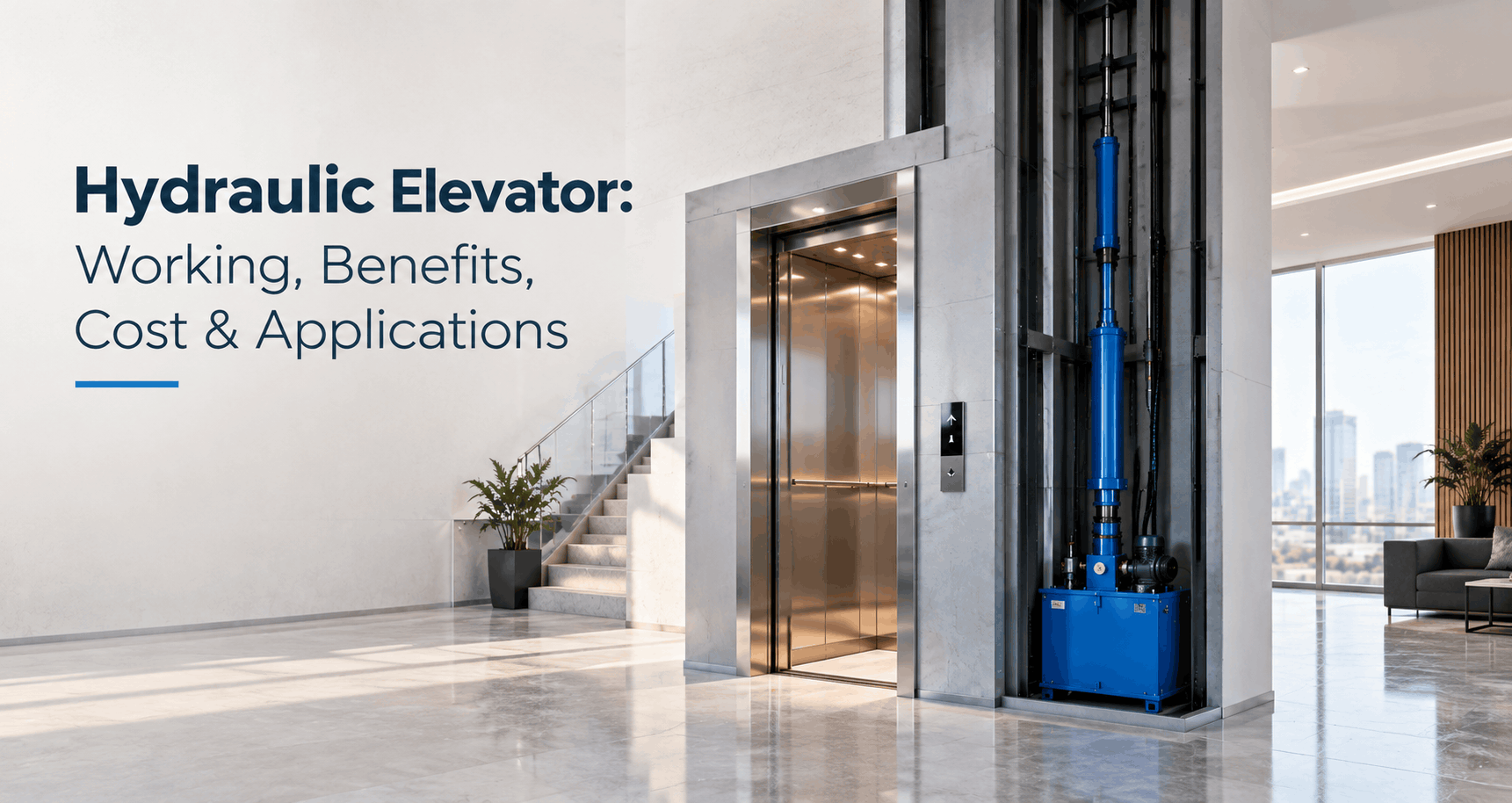
A hydraulic elevator uses a hydraulic power system to move the lifting platform or cabin. It is often considered for low-rise buildings and applications where its lifting arrangement suits the site requirements.
Its suitability depends on the building height, load, travel frequency, installation space, and operating conditions.
Typical applications:
- Low-rise industrial buildings
- Workshops
- Storage facilities
- Small manufacturing units
Businesses can explore hydraulic elevator systems when evaluating lifting solutions for suitable low-rise applications.
4. Heavy-Duty Traction Elevator
A traction elevator uses an electric motor, ropes or belts, and a counterweight system to move the cabin. Depending on its design and configuration, it can be suitable for buildings that require regular vertical transportation across multiple floors.
Industrial and commercial applications may require higher load capacities, durable components, and control systems suited to frequent operation.
Typical applications:
- Multi-storey industrial buildings
- Large commercial facilities
- Manufacturing units with multiple production levels
- Facilities with frequent goods movement
The choice between hydraulic and traction systems should be based on a technical assessment of the building and its operating requirements.
Industrial Elevator Applications
Industrial elevators support material movement in different sectors. Their configuration depends on the goods being transported and the workflow of the facility.
1. Manufacturing Plants
Manufacturing facilities often move raw materials, components, tools, and finished products between production and storage floors.
An industrial lift can help connect different stages of the production process. It can reduce dependence on manual material movement and make goods transfer more organised.
2. Warehouses and Distribution Centres
Warehouses need efficient movement of cartons, packages, pallets, and stored products. A suitable goods elevator can connect storage levels and support inventory handling.
The cabin size and door opening should be planned according to the dimensions of the goods and the equipment used for loading.
3. Automobile and Engineering Industries
Automobile and engineering facilities may need to transport spare parts, tools, components, and heavy equipment.
The elevator should be selected according to the weight and dimensions of the materials, along with the frequency of operation.
4. Food and Packaging Units
Food processing and packaging facilities move ingredients, packaging materials, finished products, and supplies between different work areas.
The cabin materials, cleaning requirements, and operating environment should be considered while selecting the system.
5. Commercial Storage Facilities
Large retail stores, distribution buildings, and commercial storage facilities may use goods elevators to move stock between floors.
A properly planned installation can support regular stock movement without interfering with passenger circulation.
Key Factors to Consider Before Choosing an Industrial Elevator
Selecting an industrial elevator requires more than checking the maximum load mentioned in a product specification. Businesses should evaluate the complete material-handling process.
1. Load Capacity
Calculate the maximum weight that the elevator will need to carry during normal operations. Include the weight of the goods, containers, pallets, and any approved loading equipment.
Choose a rated capacity that matches the actual requirement. Never operate an elevator beyond its specified load limit.
2. Cabin Dimensions
The cabin should accommodate the length, width, and height of the materials being transported.
Consider the largest item that will regularly use the elevator. Also check whether the loading arrangement allows goods to enter and exit without difficulty.
3. Building Height and Number of Floors
The number of floors and total travel distance affect the elevator configuration.
Share the building layout and floor-to-floor measurements with the elevator provider so the system can be planned according to site conditions.
4. Usage Frequency
A lift used a few times a day has different operating requirements from one used continuously throughout multiple shifts.
Discuss the expected number of trips, operating hours, loading patterns, and peak usage periods before finalising the system.
5. Installation Space
The available shaft dimensions, pit depth, overhead clearance, machine-room requirements, and access areas can influence the type of elevator that can be installed.
A site inspection helps identify space limitations before the design is finalised.
6. Maintenance and Service Support
Industrial elevators operate in demanding environments. Regular inspection and preventive maintenance help identify wear, operational issues, and safety concerns.
Consider the availability of technical support, spare parts, and maintenance services when evaluating a supplier.
Industrial Elevator Safety Features
Safety should be a key consideration when selecting and operating an industrial elevator. The required features depend on the elevator design, application, applicable regulations, and site conditions.
Important safety provisions may include:
- Overload protection: Helps prevent operation when the load exceeds the permitted capacity.
- Door interlocks: Prevent normal elevator movement when the required doors are not properly secured.
- Emergency braking: Provides a safety mechanism for specified abnormal operating conditions.
- Emergency communication: Allows users to contact authorised personnel when assistance is needed.
- Accurate floor levelling: Helps align the cabin with the landing floor for safer loading and unloading.
- Emergency power or rescue arrangements: Supports the approved rescue procedure during a power failure, where provided by the system design.
Businesses should confirm which features are included in the proposed elevator and whether they meet the requirements applicable to the installation.
Industrial Elevator Safety Practices
Even a properly designed elevator requires safe operating practices. Employees should receive suitable instructions before using the equipment.
Follow these basic precautions:
- Follow the rated capacity: Never exceed the maximum permitted load.
- Distribute goods evenly: Avoid uneven loading that may affect stability.
- Secure materials: Make sure goods cannot shift or fall during movement.
- Keep doors and entrances clear: Do not obstruct landing doors or cabin entrances.
- Avoid unauthorised operation: Only trained and authorised personnel should operate the equipment where required.
- Report unusual behaviour: Stop using the elevator and report abnormal sounds, movement, door issues, or other faults.
- Follow maintenance schedules: Arrange inspections and servicing according to manufacturer recommendations and applicable requirements.
A goods-only elevator should not be used to transport people unless it is specifically designed, approved, and rated for that purpose.
Why Choose the Right Industrial Elevator Manufacturer?
An industrial elevator is a long-term operational investment. The supplier should understand the building layout, material-handling process, and technical requirements before recommending a system.
Businesses should evaluate:
- Experience with industrial and goods-lifting applications
- Ability to customise cabin dimensions and load capacity
- Quality of components and control systems
- Installation and commissioning support
- Availability of maintenance and repair services
- Documentation and applicable safety compliance
A reliable supplier should explain the technical specifications, installation requirements, operating limitations, and maintenance responsibilities clearly.
Conclusion
An industrial elevator helps factories, warehouses, and manufacturing facilities move goods between floors in a more organised way. Goods elevators, freight elevators, hydraulic elevators, and traction systems serve different requirements. The right choice depends on load capacity, cabin dimensions, building height, usage frequency, installation space, and safety provisions.
Before selecting an industrial lift, evaluate your facility's material-handling needs and discuss the technical requirements with an experienced supplier. Force Lifts provides elevator solutions for different applications, along with installation and maintenance support. Businesses planning a new project can contact Force Lifts to discuss their industrial lifting requirements.