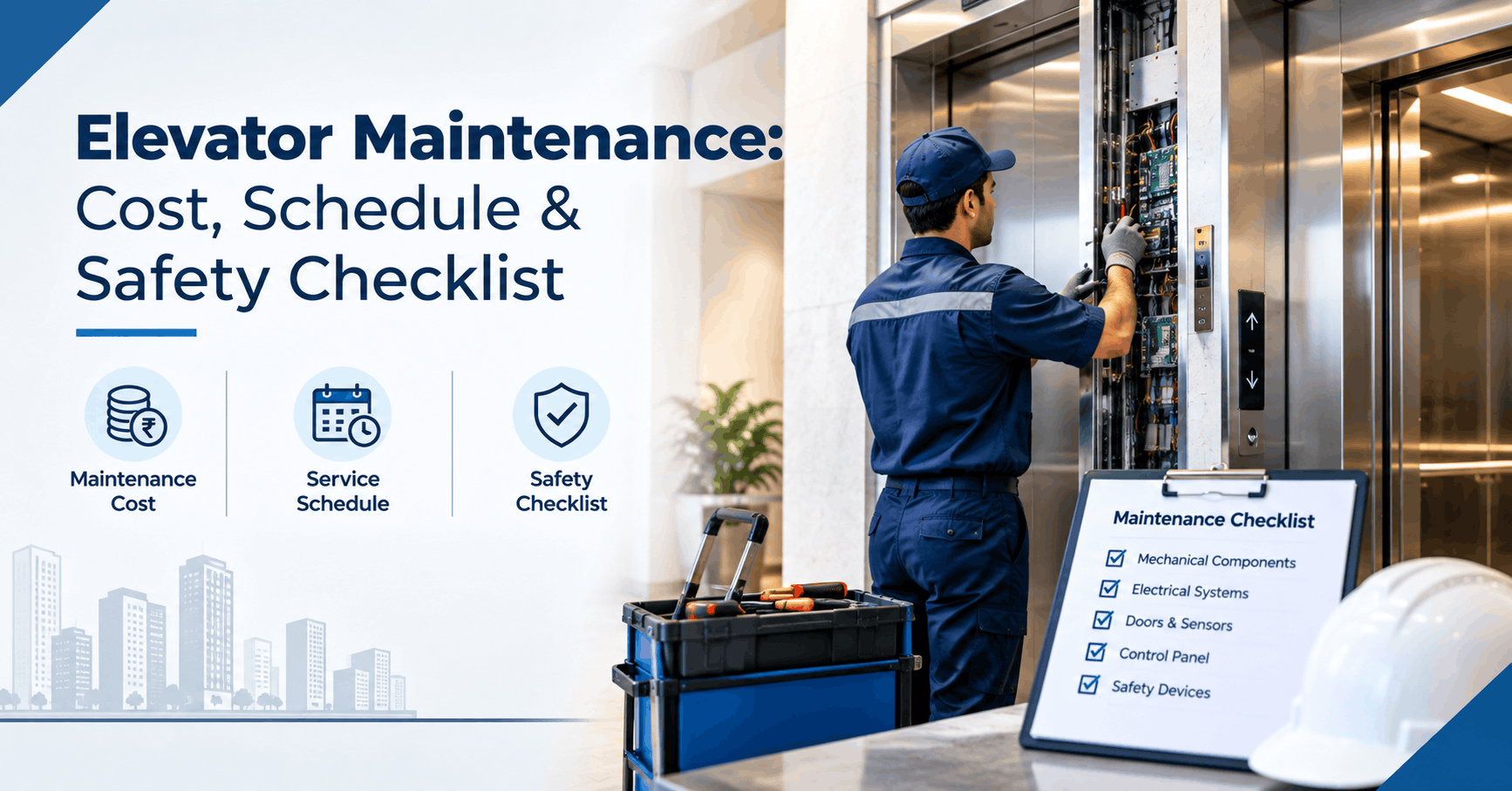
An elevator is an essential part of residential buildings, commercial complexes, hospitals, hotels and industrial facilities. It helps people and goods move between floors safely and efficiently. However, regular use can cause wear and tear in mechanical components, electrical systems, doors, control panels and other important parts. Without proper maintenance, even a small issue can affect elevator performance, increase repair expenses and create safety risks for passengers.
Elevator maintenance helps keep a lift reliable, safe and efficient throughout its service life. Whether you manage a residential apartment, commercial building or industrial property, understanding maintenance costs, service schedules and essential safety checks can help you prevent unexpected breakdowns. Working with an experienced elevator company in Jaipur can also help building owners plan suitable servicing and repairs. This guide explains the factors that affect maintenance expenses, what a maintenance visit should include and how to choose the right service plan for your building.
Why Is Elevator Maintenance Important?
Elevators contain several interconnected mechanical and electrical components. These components must work together correctly to ensure smooth movement between floors and safe passenger entry and exit.
Regular servicing provides several important benefits.
1. Improves Passenger Safety
Elevator safety depends on properly functioning brakes, door interlocks, sensors, emergency communication systems and other protective devices. Routine inspections help identify faults before they develop into serious problems.
Maintenance professionals should check safety devices according to the manufacturer's instructions and applicable regulations. Building owners should never allow unqualified individuals to adjust safety-critical components.
2. Reduces Unexpected Breakdowns
An elevator breakdown can inconvenience residents, employees, visitors and customers. In buildings with heavy foot traffic, downtime can create significant operational difficulties.
Regular inspections help technicians identify unusual noises, door problems, inconsistent movement and electrical faults early. Correcting these issues can reduce unexpected service interruptions.
3. Helps Control Repair Costs
Ignoring minor faults can lead to more extensive damage. For example, a door mechanism that does not operate correctly may require additional adjustments or component replacement if the underlying problem remains unresolved.
Preventive maintenance helps detect developing issues and allows building managers to plan repairs before they become more expensive.
4. Supports Long-Term Equipment Performance
Elevators experience different levels of wear depending on passenger traffic, operating conditions and installation quality. Proper servicing helps maintain the performance of moving parts, door mechanisms and control systems.
Although maintenance cannot eliminate component ageing, it can help equipment operate more reliably and support informed decisions about repairs and replacement.
5. Helps Maintain Compliance
Elevator owners and building managers must follow applicable safety regulations, inspection requirements and manufacturer recommendations. Maintenance records can help demonstrate that routine servicing and identified repairs have been addressed.
Requirements vary by state, building type and elevator installation. Owners should confirm the applicable rules with qualified professionals and the relevant local authority.
Elevator Maintenance Cost in India
The cost of elevator maintenance depends on several factors. There is no single price that applies to every lift because residential elevators, commercial passenger lifts and goods elevators can have different servicing requirements.
When evaluating lift maintenance cost, building owners should consider the following factors.
1. Type of Elevator
Different elevator systems have different maintenance needs.
- Passenger elevators: Used in apartments, offices, hotels and commercial buildings.
- Hydraulic elevators: Use a hydraulic power system and require attention to components such as the pump, valves, cylinder and associated controls.
- Goods elevators: Designed to transport materials and equipment, with maintenance requirements influenced by load capacity and operating conditions.
- Machine-room-less elevators: Have different equipment layouts and access requirements compared with conventional machine-room installations.
The elevator type affects the inspection process, spare parts requirements and time needed for servicing. Understanding the equipment installed in your building, including a hydraulic elevator in Jaipur where applicable, can help you discuss the correct maintenance requirements with a service provider.
2. Elevator Age and Condition
A newer elevator may require routine preventive servicing, while an older installation may need additional attention because of component wear or obsolete parts.
The condition of the door system, motor, controller, brakes and other components can influence the overall maintenance budget.
3. Usage and Traffic
An elevator serving a busy office building may operate much more frequently than one installed in a small residential property.
Higher usage can increase wear on door mechanisms, switches and other frequently operated components. Maintenance frequency should reflect actual operating conditions rather than relying only on a standard calendar schedule.
4. AMC Coverage
An Annual Maintenance Contract, commonly called an elevator AMC or lift AMC, defines the services a maintenance provider will deliver during the contract period.
Some contracts cover routine inspection and servicing only. Others may include breakdown visits, labour, selected spare parts or additional support, depending on the agreed terms.
Before comparing quotations, confirm exactly what is included and excluded. A lower-priced contract may not provide the same coverage as a more comprehensive plan.
5. Spare Parts and Major Repairs
Routine servicing and major repairs are not always covered under the same agreement. Replacement of controllers, motors, door operators, ropes, hydraulic components or other major parts can increase expenses.
Ask the service provider to clarify whether spare parts, emergency visits, overtime charges and major component replacements are included in the quoted price.
How to estimate your elevator maintenance budget: Request a written quotation after sharing the elevator type, number of floors, usage level, installation age and existing equipment condition. Compare service frequency, coverage, response times and exclusions rather than choosing a provider on price alone.
Elevator Maintenance Schedule: How Often Should a Lift Be Serviced?
The correct maintenance schedule depends on the elevator manufacturer's recommendations, applicable regulations, operating conditions and the service agreement. A qualified maintenance provider should establish a schedule suitable for the specific installation.
The following is a practical planning guide, not a substitute for the manufacturer's prescribed maintenance intervals or statutory inspection requirements.
Daily: Basic Operational Observation
Building staff can observe the elevator during normal use without opening equipment panels or entering restricted areas.
Check for:
- Unusual noises or vibrations during operation.
- Doors that hesitate, fail to close properly or reopen unexpectedly.
- Noticeable differences in floor levelling.
- Damaged buttons, indicators or visible fixtures.
- Problems with passenger communication or emergency instructions.
Any abnormal behaviour should be reported promptly to the maintenance provider. Staff should not attempt to repair the equipment themselves.
Monthly: Routine Professional Servicing
A maintenance technician can carry out scheduled inspections and servicing based on the equipment requirements and contract.
Typical tasks may include:
- Checking door operation and associated safety devices.
- Inspecting accessible electrical connections and control components.
- Assessing unusual noises, vibration and movement.
- Examining relevant mechanical components for wear.
- Checking indicators and communication equipment.
- Reviewing previously reported faults and completed repairs.
The exact tasks and frequency must be determined for the installed elevator. Some systems require more frequent attention.
Quarterly: Review of Equipment Condition
A periodic condition review can help building managers understand recurring faults and identify components that may need closer monitoring.
Depending on the elevator and manufacturer, the technician may review door performance, operating reliability, component wear, fault history and the condition of relevant mechanical or electrical systems.
Quarterly servicing should not be assumed to replace monthly visits or any more frequent checks required under the maintenance plan.
Annually: Comprehensive Maintenance and Inspection Review
An annual review is an opportunity to assess the overall condition of the elevator, examine maintenance records and plan future work.
It may include a review of safety-device inspections, recurring faults, component replacement recommendations and compliance documentation. Any formal inspection or test required by law must be performed at the prescribed interval by the appropriate authorised person or authority.
An annual review does not mean that the elevator needs servicing only once a year. Routine maintenance must continue throughout the year according to the established schedule.
Elevator Safety Checklist for Building Owners
A structured safety checklist helps building managers report problems quickly and confirm that maintenance activities have been completed.
1. Elevator Doors
Doors are among the most frequently used elevator components and can be affected by regular operation.
Check whether the doors open and close smoothly, whether visible damage is present and whether unusual delays occur. Door sensors and interlocks must be inspected by qualified technicians.
Never force a door open or attempt to adjust its mechanism.
2. Braking and Levelling Performance
The elevator should stop at floors and allow passengers to enter and exit safely. Noticeable levelling differences, unusual stopping behaviour or unexpected movement should be reported immediately.
Brakes and related safety systems must be examined and tested by qualified technicians using the prescribed procedures.
3. Emergency Alarm and Communication
Passengers should have access to the installed emergency communication system. Building staff should know how to report an emergency and contact the designated maintenance provider.
Any required testing must follow the equipment manufacturer's instructions and applicable safety procedures.
4. Electrical Systems and Control Panels
Control systems, wiring and electrical components are essential to reliable elevator operation.
Qualified technicians should inspect the relevant equipment for faults, damage or signs of overheating. Building staff must not open electrical cabinets or carry out work on live equipment.
5. Emergency Power and Rescue Arrangements
Where an elevator has an emergency power supply or automatic rescue device, the system should be inspected and tested as prescribed for that installation.
Building management should also maintain a clear emergency response procedure and ensure that staff know whom to contact if passengers become trapped.
Only trained and authorised personnel should carry out passenger rescue. Untrained staff should never attempt to move the elevator manually or open landing doors to release passengers.
6. Machine Room and Restricted Areas
Where applicable, machine rooms and other restricted equipment areas should remain secure, accessible to authorised personnel and free from unrelated storage.
Building staff can report visible water leakage, unusual smells or other signs of a potential problem from a safe location. Equipment inspection and repair must be left to qualified professionals.
7. Maintenance Records
Maintain a record of service visits, reported problems, repairs, replaced parts, inspection findings and recommendations.
These records help identify recurring issues, monitor the service provider's performance and plan future maintenance expenditure.
What Is an Elevator AMC and Why Should You Consider It?
An Annual Maintenance Contract is an agreement between an elevator owner or building manager and a maintenance service provider. It specifies the servicing schedule, responsibilities, coverage and commercial terms for a defined period.
A suitable elevator AMC can help building managers plan maintenance expenditure and arrange regular professional servicing.
Types of Elevator AMC
1. Basic maintenance contract
A basic plan generally focuses on scheduled inspections and preventive servicing. Spare parts, major repairs and certain emergency visits may be charged separately.
2. Comprehensive maintenance contract
A comprehensive plan may cover routine servicing, selected replacement parts, labour and breakdown support. The actual coverage depends on the signed agreement, so every inclusion and exclusion should be checked.
3. Customised maintenance contract
Some buildings require a tailored plan because of heavy usage, specialised equipment, multiple elevators or specific operational requirements. A customised contract can define service frequency and response arrangements according to the needs of the building.
How to Choose the Right Lift AMC
Before signing a contract, ask the provider:
- How many preventive maintenance visits are included?
- Which parts and labour charges are covered?
- Are emergency breakdown visits included?
- What is the expected response time for service calls?
- Are major repairs and component replacements excluded?
- Will the provider maintain service reports and recommend corrective action?
- Are inspections and tests required by applicable regulations included, or charged separately?
Read the contract carefully and confirm all agreed terms in writing. The right plan should suit the elevator's condition, usage and operational requirements.
Common Elevator Maintenance Mistakes to Avoid
Even buildings with maintenance contracts can experience avoidable problems when routine procedures are overlooked.
Ignoring Early Warning Signs
Unusual sounds, repeated door faults, vibration and inconsistent stopping should never be dismissed as normal. Report these issues and arrange professional assessment.
Delaying Recommended Repairs
A technician may identify a worn component that needs replacement or adjustment. Delaying necessary work can increase the likelihood of a breakdown and may affect safe operation.
Building management should review repair recommendations promptly and follow the technician's instructions about whether the elevator can continue operating safely.
Choosing an AMC Only by Price
A low-cost agreement may exclude important services or replacement parts. Compare the complete scope of work, technician availability, response arrangements and exclusions before making a decision.
Allowing Untrained Repairs
Elevator equipment contains moving machinery, electrical systems and safety-critical devices. Unauthorised adjustments can create serious hazards.
Maintenance and repairs should be carried out only by appropriately trained and authorised personnel.
Failing to Maintain Service Records
Without records, it becomes difficult to track recurring problems, confirm completed work and evaluate whether the service agreement meets the building's needs.
Maintain a central service log and review it regularly with the maintenance provider.
How to Select a Reliable Elevator Maintenance Provider
Choosing a capable service provider is important for maintaining lift safety and performance over time.
Consider the following factors before appointing a company:
- Technical expertise: Check experience with your elevator type, controller and installed equipment.
- Qualified technicians: Confirm that servicing and repair personnel have the appropriate training and authorisation.
- Clear service agreements: Review maintenance frequency, parts coverage, exclusions and emergency arrangements.
- Service documentation: Ensure that the provider supplies visit reports and records important repairs.
- Safety procedures: Ask how inspections, fault reporting and emergency response are handled.
- Transparent quotations: Request an itemised estimate for routine servicing, additional repairs and replacement parts.
When evaluating an elevator company in Jaipur, review its technical experience, service capabilities and understanding of your equipment. You can also explore elevator projects in Jaipur to learn more about the company's project experience and the types of elevator installations it handles.
When Should an Elevator Be Stopped for Inspection?
Not every operational issue requires the same response, but certain warning signs demand immediate attention.
Report the problem to the maintenance provider and follow the building's emergency procedures if the elevator shows signs such as:
- Uncontrolled or unexpected movement.
- Repeated failure to stop or level correctly.
- Damaged doors or suspected failure of a safety interlock.
- Smoke, a burning smell or signs of electrical overheating.
- Serious unusual noises or vibration.
- Water entering electrical or machinery areas.
If a serious safety fault is suspected, prevent further use until a qualified professional has assessed the equipment and confirmed that it is safe to operate.
If passengers are trapped, contact the designated emergency service or maintenance team and follow the established rescue procedure. Do not try to force the doors open or perform an unauthorised rescue.
Conclusion
Regular elevator maintenance is essential for passenger safety, reliable operation and better control over long-term building expenses. A well-planned maintenance programme should cover routine inspections, professional servicing, safety-device checks, prompt repairs and accurate service records. Building owners should also understand the factors that affect lift maintenance cost, including elevator type, usage, equipment condition, spare parts and the coverage provided under an AMC.
When planning elevator maintenance, focus on the requirements of your specific installation rather than relying on a generic schedule or the lowest quotation. Choose a qualified elevator company in Jaipur, review maintenance recommendations promptly and ensure that all required inspections are completed. You can also explore elevator projects in Jaipur to understand relevant installation experience when evaluating a service provider. Consistent elevator maintenance can help reduce avoidable downtime, support safe operation and keep your building's vertical transportation system dependable over time.