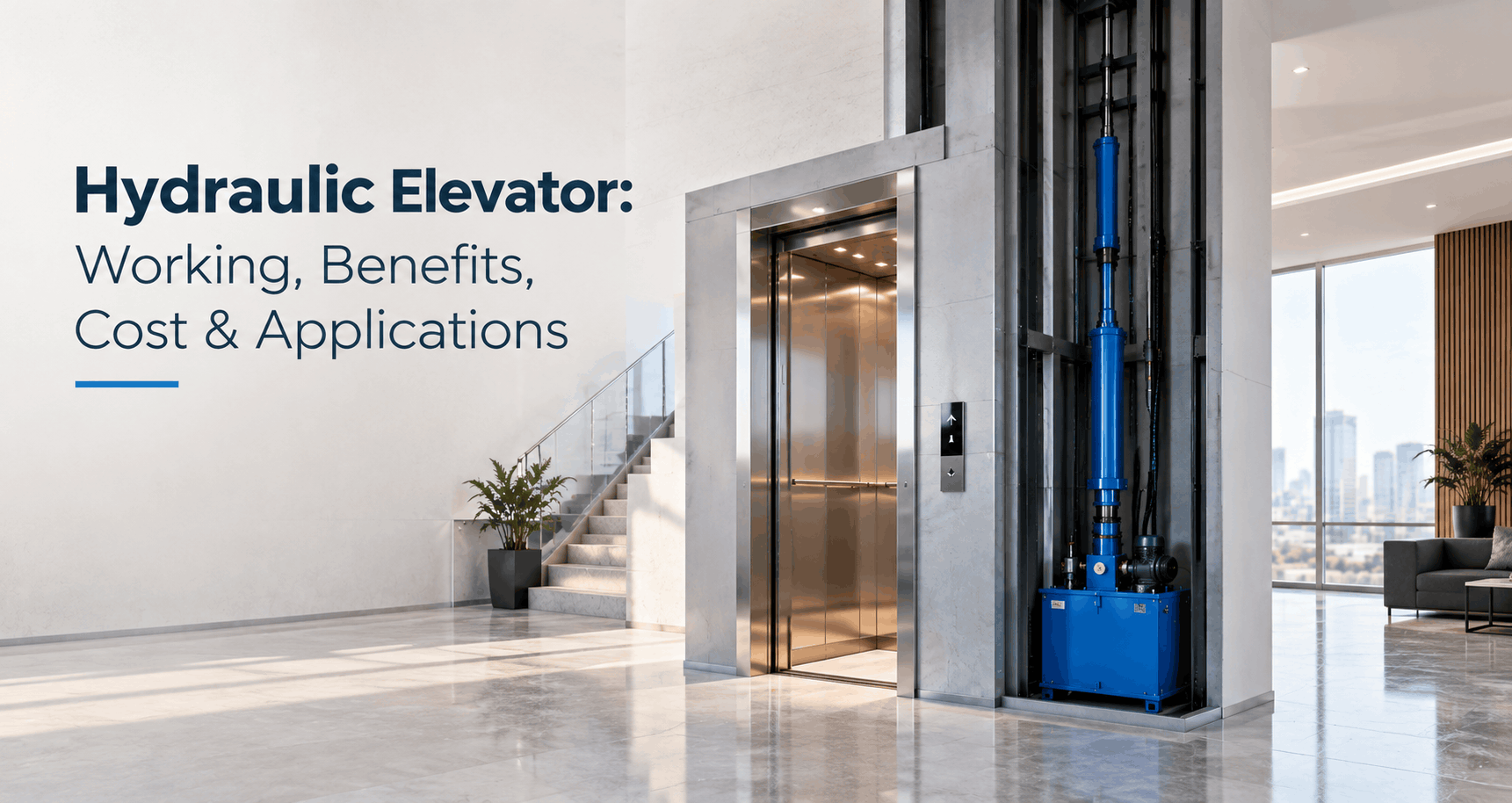
Choosing the right elevator is an important decision when planning a residential, commercial or industrial building. The elevator system affects passenger comfort, accessibility, installation requirements, maintenance and long-term operating costs. For low-rise buildings and applications that require dependable load handling, hydraulic elevators can be a practical solution. However, understanding how the system works and where it performs best is essential before making a decision.
A hydraulic elevator uses pressurised fluid to move an elevator cabin between floors. It is commonly considered for low-rise buildings, private residences, commercial spaces and certain industrial applications. If you are evaluating a hydraulic elevator in Jaipur, understanding its working mechanism, installation requirements, cost factors and safety features can help you select a system that suits your building.
What Is a Hydraulic Elevator?
A hydraulic elevator is a vertical transportation system that uses fluid pressure to raise an elevator cabin. Unlike a conventional traction elevator, which moves using ropes or belts and a drive machine, a hydraulic system relies on a hydraulic power unit and a piston-based lifting mechanism.
The main components generally include:
- Hydraulic power unit: Contains the pump, motor, reservoir and associated control components.
- Hydraulic cylinder and piston: Convert hydraulic pressure into lifting movement.
- Elevator cabin: Carries passengers or permitted loads between floors.
- Control system: Manages floor selection, movement and operational functions.
- Valves and piping: Regulate hydraulic fluid flow and pressure.
- Safety devices: Help control movement and respond to specified fault conditions.
The exact configuration varies depending on the elevator design, building layout, load capacity and manufacturer specifications.
Hydraulic elevators are particularly relevant where moderate travel height, reliable lifting and smooth movement are priorities. A professional site assessment is still necessary to determine whether the technology is suitable for a specific building.
How Does a Hydraulic Elevator Work?
The working principle is based on Pascal's law, which explains how pressure applied to a confined fluid is transmitted through that fluid.
The system converts electrical energy into hydraulic pressure, which then produces the force needed to lift the cabin.
1. The Motor Powers the Hydraulic Pump
When a passenger selects a floor and the control system receives a valid command, the motor operates the hydraulic pump. The pump draws fluid from the reservoir and sends it through the hydraulic circuit.
2. Pressurised Fluid Moves the Piston
The pressurised fluid enters the cylinder and acts on the piston. The resulting force moves the piston upward, lifting the cabin through the connected lifting arrangement.
The required pressure and equipment capacity depend on the elevator's rated load, design and travel requirements.
3. The Cabin Reaches the Selected Floor
The control system manages the elevator's movement and stopping sequence. Properly designed equipment helps the cabin approach the destination floor smoothly and stop at the required landing level.
4. Controlled Fluid Release Lowers the Cabin
During descent, the system generally allows hydraulic fluid to return towards the reservoir through controlled valves. This enables the cabin to move down under its own weight, subject to the system's design and safety controls.
A hydraulic elevator may not need the motor to power the downward movement in the same way it powers ascent. However, electrical power may still be required for controls, monitoring and other functions.
5. Safety Systems Monitor Operation
Pressure controls, landing interlocks, emergency lowering arrangements and other safety devices depend on the elevator design and applicable standards. Regular inspection and maintenance are necessary to keep the system operating as intended.
Key Benefits of Hydraulic Elevators
Hydraulic elevators offer several advantages, particularly for buildings with suitable height and traffic requirements.
1. Smooth and Comfortable Travel
A properly designed hydraulic system can provide smooth starting, movement and stopping. This can improve comfort for residents, visitors and staff.
Ride quality depends on equipment selection, installation quality, load conditions and maintenance.
2. Suitable for Many Low-Rise Buildings
Hydraulic technology is commonly considered for buildings with a limited number of floors. It can be useful for homes, small commercial properties and selected institutional facilities where very high travel speeds are not essential.
The final suitability depends on the building's travel height, local requirements and intended use.
3. Effective Load Handling
Hydraulic systems can be designed for substantial loads, making them relevant to some commercial and industrial applications. Load capacity must be selected according to the actual requirement rather than assumed from the technology alone.
For goods movement, the cabin, loading arrangement, door configuration and safety provisions should all match the intended use.
4. Flexible Installation Possibilities
Depending on the design, hydraulic equipment can offer practical installation options for certain building layouts. The cylinder arrangement, pit, shaft, power unit location and maintenance access must be planned in advance.
Available space should be assessed by an elevator professional before construction or renovation work begins.
5. Potentially Practical Installation Costs
For suitable low-rise applications, hydraulic systems may offer a competitive initial installation cost compared with some alternatives. However, the result depends on the building design, required capacity, equipment configuration and site preparation.
A lower initial price does not necessarily mean lower lifetime cost. Buyers should compare maintenance, energy consumption, expected usage and service support as well.
6. Convenient Accessibility
An elevator can help people move between floors more comfortably, including older adults and people with mobility limitations. Appropriate cabin dimensions, door widths, controls and accessibility features should be considered during planning.
Hydraulic Elevator Cost: What Affects the Price?
The cost of a hydraulic elevator varies from one project to another. There is no single price that applies to every building because equipment, installation conditions and performance requirements can differ significantly.
Instead of comparing quotations based only on the headline price, review what each proposal includes.
1. Rated Load Capacity
The required capacity is one of the main cost factors. A system designed for a few passengers may require different equipment from one intended for heavier commercial loads.
The expected number of users, type of goods and loading conditions should be clearly specified.
2. Number of Floors and Travel Height
The number of stops and total travel distance influence the system configuration and installation work. A building with more floors may require different equipment specifications from a small, low-rise property.
3. Cabin Size and Finishes
Standard cabin finishes may cost less than customised interiors, premium panels, specialised flooring or other design upgrades.
For commercial buildings, the cabin should balance appearance, durability, cleaning requirements and the type of traffic expected.
4. Civil and Electrical Work
Shaft construction, pit preparation, structural modifications, electrical supply and equipment-room arrangements can affect the total project budget.
These requirements should be assessed before finalising the quotation to reduce the risk of unexpected expenses.
5. Safety Features and Controls
The required control system, door protection, emergency communication, lowering arrangements and other safety components influence the overall specification.
Safety should not be compromised simply to reduce the purchase price. Confirm the relevant standards and required approvals for the project.
6. Installation and After-Sales Service
The quotation should clearly explain the scope of installation, testing, commissioning, warranty and ongoing service. Buyers should also understand which maintenance tasks are included and which are charged separately.
When comparing a hydraulic lift price, request itemised quotations with the same load capacity, number of stops, travel height, features and service terms. This makes the comparison more meaningful than looking at price alone.
Common Applications of Hydraulic Elevators
Hydraulic systems can serve different building types, provided the design matches the application's operating requirements.
Residential Buildings and Private Homes
Hydraulic elevators may be considered for villas, duplex homes and other low-rise residential properties. They can improve accessibility and make moving between floors more convenient.
The design should account for available space, household needs, expected usage and future maintenance access.
Commercial Buildings
Small offices, retail properties and selected commercial buildings may use hydraulic systems when their floor count and traffic levels are suitable.
Before selecting the system, building owners should assess passenger demand, waiting times, operating hours and the possibility of future expansion.
Hospitals and Healthcare Facilities
Some healthcare applications can use hydraulic elevators, but the system must be designed for the specific purpose. Patient movement may require stretcher-compatible cabin dimensions, reliable levelling, suitable door openings and other specialised features.
Hospitals should select equipment based on clinical operations, applicable safety requirements and professional engineering advice, rather than assuming every hydraulic system is suitable.
Warehouses and Industrial Facilities
Hydraulic technology may be used in certain industrial environments for moving goods and equipment between levels. The system must be specifically rated and configured for the intended load.
A passenger elevator should never be used to carry goods beyond its approved capacity or intended purpose.
Hotels and Hospitality Properties
Selected low-rise hospitality buildings may consider hydraulic elevators where traffic and travel requirements are compatible with the technology. Cabin appearance, passenger comfort, reliability and service availability remain important selection factors.
Hydraulic Elevator vs Traction Elevator
Both technologies move passengers vertically, but they use different mechanisms and suit different operating conditions.
| Factor | Hydraulic Elevator | Traction Elevator |
|---|---|---|
| Working mechanism | Uses pressurised fluid and a piston | Uses ropes or belts, sheaves and a drive machine |
| Typical suitability | Often considered for low-rise buildings | Used across a broad range of building heights |
| Travel speed | Generally suited to moderate-speed applications | Can support higher speeds, depending on design |
| Installation requirements | Requires hydraulic equipment and suitable cylinder arrangement | Requires a traction machine, suspension system and associated equipment |
| Energy use | Can require significant power during ascent; descent may use gravity with controlled fluid release | Depends on drive efficiency, load and whether regenerative technology is used |
| Cost comparison | May be competitive in suitable low-rise projects | Can be more suitable for projects requiring greater speed or travel height |
| Maintenance | Requires attention to fluid, seals, valves and hydraulic equipment | Requires attention to suspension components, drive equipment, brakes and other parts |
Neither option is automatically better for every building. The correct choice depends on the number of floors, expected traffic, speed, space, energy requirements, installation budget and maintenance arrangements.
Safety and Maintenance Considerations
Safety should be a priority when selecting and operating any elevator system. Hydraulic equipment requires correct installation, routine inspection and maintenance by qualified professionals.
Important considerations include:
- Hydraulic fluid and leakage: Inspect the system for leaks and ensure the correct fluid is used according to manufacturer instructions.
- Cylinder, seals and valves: These components should be checked for wear, leakage and correct operation.
- Door and landing interlocks: Ensure doors operate correctly and the elevator cannot move under unsafe door conditions.
- Emergency lowering: Understand the manufacturer's emergency procedures and ensure the relevant system is maintained.
- Levelling and ride quality: Report unusual movement, noise, vibration or stopping problems promptly.
- Periodic servicing: Follow the prescribed maintenance schedule and applicable local requirements.
Building owners should maintain service records and ensure that only authorised personnel carry out technical repairs. If the elevator develops a fault, stop using it when necessary and contact the service provider rather than attempting to repair hydraulic or electrical components yourself.
How to Choose the Right Hydraulic Elevator for Your Building
Before purchasing an elevator, consider the following points:
- Define the application: Decide whether the elevator will carry passengers, goods or a specifically approved combination.
- Confirm the load and travel height: Share the expected load, number of floors and travel distance with the supplier.
- Assess the site: Check the shaft, pit, power supply, equipment location and access for maintenance.
- Compare technical specifications: Review capacity, speed, cabin dimensions, door type, controls and required safety features.
- Evaluate service support: Ask about warranty coverage, spare parts availability, response times and preventive maintenance.
- Compare complete quotations: Check installation, civil work, testing, commissioning and ongoing costs instead of comparing equipment prices alone.
Reviewing relevant elevator projects in Jaipur can also help building owners understand the supplier's project experience and the types of installations it undertakes. Always confirm that the proposed system is appropriate for your specific building and operating needs.
Conclusion
A hydraulic elevator can be a practical choice for low-rise residential, commercial and selected industrial buildings where smooth movement, appropriate load capacity and installation requirements align with the project. Its suitability depends on the building's height, passenger traffic, space, energy use, safety requirements and long-term service arrangements. Understanding these factors helps buyers compare systems on technical value rather than initial price alone.
Before choosing equipment, request a site assessment and a detailed quotation that covers installation, safety features, commissioning and maintenance. If you are evaluating options for your building, consult an experienced elevator company in Jaipur to discuss the required capacity, travel height, site conditions and suitable system configuration. A properly selected and maintained elevator can support reliable vertical transportation throughout its service life.