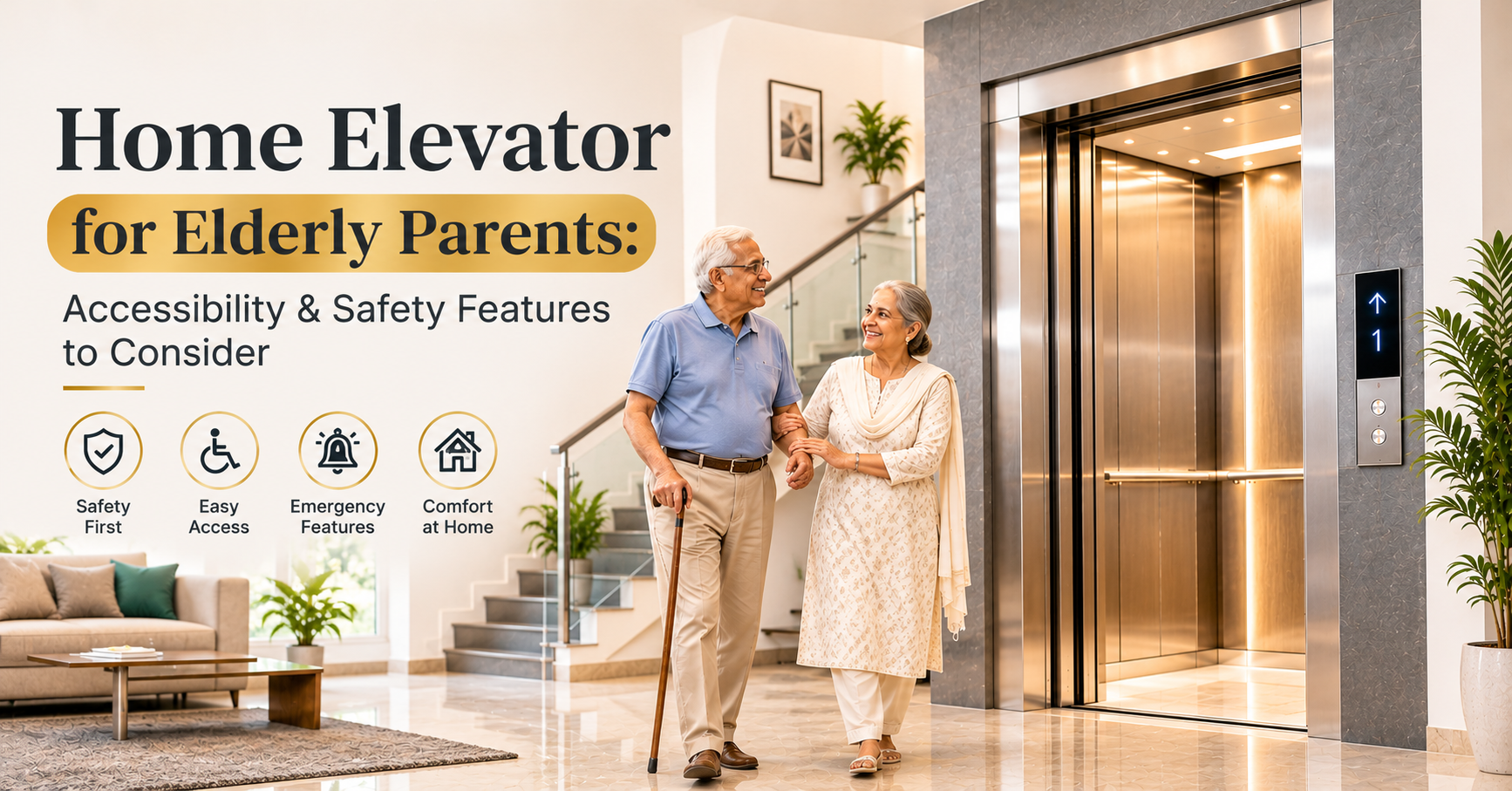
As parents grow older, climbing stairs in a multi-storey home can become difficult due to reduced mobility, balance concerns or joint discomfort. Everyday movement between floors may require extra effort and assistance.
A home elevator for elderly family members can make this movement more convenient and support greater independence. However, choosing the right home elevator requires careful consideration of cabin space, accessible controls, door operation and emergency safety features.
Why Do Elderly Parents Need an Accessible Home Elevator?
Staircases can become a daily challenge for senior citizens, particularly when they experience reduced strength, balance difficulties or mobility limitations.
A residential elevator can make different floors easier to access without repeatedly climbing stairs. It may be particularly useful for:
- Reduced mobility: People who find stair climbing difficult can move between floors more conveniently.
- Joint discomfort: An elevator can reduce the need for repeated stair climbing.
- Walking aid users: Suitable cabin and entrance dimensions can make travelling with a walking stick or walker easier.
- Wheelchair users: A suitably configured elevator may accommodate wheelchair access, depending on its dimensions.
- Long-term home planning: Families can consider changing mobility requirements when designing or upgrading their homes.
An elevator does not replace personal assistance when required, but it can be a useful part of an accessible home environment.
Important Accessibility Features in an Elderly-Friendly Home Elevator
Accessibility should be considered during the initial planning stage. The cabin should be convenient for the person who will use it regularly, rather than being selected only for its appearance.
Easy-to-Reach Control Buttons
Control buttons should be positioned at a comfortable height so that elderly passengers do not need to stretch or bend unnecessarily.
Look for:
- Clearly labelled floor buttons.
- Easy-to-understand controls.
- Buttons that are simple to press.
- Visible floor indicators.
- Convenient control placement.
For people with limited hand movement or poor eyesight, button size, visibility and positioning can make everyday operation easier.
Comfortable Cabin Space
Cabin dimensions should match the user's mobility requirements. Someone using a walking stick may need a different configuration from someone who uses a wheelchair.
Before finalising the cabin, consider:
- Whether the user can enter and exit comfortably.
- Whether there is enough space for a walking aid.
- Whether a wheelchair can enter and turn, if required.
- Whether a caregiver can travel alongside the passenger.
- Whether handrails can be incorporated into the cabin.
Discuss the actual dimensions with the manufacturer instead of assuming that every residential elevator can accommodate a wheelchair.
Suitable Door Opening and Closing
The elevator entrance should allow passengers to enter and exit without difficulty. A narrow entrance or fast-closing door may create problems for someone using a walking aid.
Ask the manufacturer about:
- Clear entrance width.
- Door opening and closing time.
- Automatic door operation.
- Obstruction detection.
- Door reopening arrangements.
The final door configuration should suit the user's mobility and the home's layout.
Slip-Resistant Cabin Flooring
A stable cabin floor is important for passengers who may have balance difficulties. Choose flooring that offers suitable grip and remains easy to clean.
Also check the transition between the elevator cabin and the landing floor. Avoid unnecessary level differences that could create a tripping risk.
Handrails and Supportive Interiors
Handrails can provide additional support while entering, exiting or standing inside the elevator. Their placement should be planned according to cabin dimensions and the user's requirements.
A practical cabin should provide enough room for comfortable movement without unnecessary obstructions.
Essential Safety Features to Check
Accessibility and safety should be considered together. Before purchasing an elevator, ask the manufacturer about the following residential lift safety features.
Automatic Rescue Device (ARD)
A power failure may interrupt elevator operation while someone is travelling between floors. An Automatic Rescue Device, when included in the selected model, uses backup power to help move the cabin to a suitable landing so passengers can exit.
Confirm whether the elevator includes an ARD and understand its operating conditions and limitations.
Emergency Communication System
An emergency communication facility allows passengers to contact someone if they need assistance inside the elevator.
Check whether the selected system includes an intercom or another communication arrangement, whether it works during a power interruption and who receives the emergency call.
Door Interlocks and Obstruction Protection
Door interlocks help prevent elevator movement when the relevant doors are not properly closed and locked.
Door sensors or obstruction protection may also help detect objects in the doorway. This is particularly useful when passengers enter with walking sticks, walkers or wheelchairs.
Overload Protection
Overload protection helps prevent elevator operation when the load exceeds its rated capacity. The system may provide an alert so passengers can reduce the load before travelling.
Always understand the elevator's rated capacity and avoid exceeding it.
Emergency Braking System
Emergency braking systems are designed to respond to certain abnormal operating conditions, such as overspeed. Ask the manufacturer which braking and safety devices are included in the selected model and how they are inspected.
Note: Safety features vary by elevator model and configuration. Always verify the actual specifications and applicable safety requirements before installation.
For additional information about elevator protection systems, families can review Force Lifts' elevator safety information.
How to Choose the Right Home Elevator for Senior Citizens
The right elevator depends on the building, available space and the user's mobility requirements. Consider these factors before making a decision.
Understand the User's Mobility Requirements
Start by identifying how the elderly person will use the elevator.
- Will they walk independently?
- Will they use a walking stick or walker?
- Is wheelchair access necessary?
- Will a caregiver usually travel with them?
- Are there any specific accessibility requirements?
These answers can help determine suitable cabin dimensions, entrance width, control placement and other design considerations.
Evaluate Available Space
Every home has different architectural limitations. Available shaft space, floor-to-floor height, pit requirements and overhead space can influence elevator selection.
A site inspection helps determine which configuration may be suitable for the property.
Compare Available Elevator Types
Residential elevators are available in different configurations. Their suitability depends on building height, travel requirements, available space and technical specifications.
| Elevator type | Important consideration |
|---|---|
| Machine Roomless (MRL) | Equipment arrangement and available space |
| Machine Room | Space required for a separate machine room |
| Hydraulic | Building height and travel requirements |
The elevator type alone does not determine whether it is suitable for elderly passengers. Cabin accessibility, controls and safety systems should also be evaluated.
Check Maintenance and Service Support
Regular maintenance is important for reliable elevator operation. Before purchasing, ask the manufacturer about:
- Recommended maintenance frequency.
- Emergency breakdown support.
- Inspection procedures.
- Replacement parts availability.
- Service response arrangements.
- Emergency rescue instructions.
Family members should know whom to contact if the elevator stops working or displays an unusual warning.
Plan for Future Accessibility Needs
Mobility requirements may change over time. An elevator that is suitable today may need additional accessibility considerations in the future.
If wheelchair access or caregiver assistance may be required later, discuss cabin dimensions and entrance arrangements before finalising the design.
What Should Families Discuss Before Installation?
Proper planning can help avoid problems during installation and everyday use.
Site inspection: Ask the manufacturer to evaluate the available space, building structure and installation requirements.
Cabin configuration: Confirm cabin dimensions, entrance arrangement, flooring, lighting and interior features.
Safety specifications: Request details about emergency rescue, door interlocks, overload protection and communication systems.
Electrical requirements: Understand the power supply and backup arrangements required by the selected model.
Installation schedule: Discuss site preparation, expected timelines and coordination with other construction work.
User training: Ask the installation team to explain normal operation, emergency communication and basic precautions to all family members.
You can also explore Force Lifts' elevator installation services to understand the importance of installation planning and professional support.
Common Mistakes to Avoid
Families sometimes focus mainly on cabin appearance, price or available space. This can result in an elevator that does not fully meet the user's needs.
Avoid these common mistakes:
- Choosing only by appearance: A stylish cabin is not enough if its controls or entrance are difficult to use.
- Ignoring wheelchair requirements: Discuss cabin dimensions and entrance width before installation if wheelchair access may be needed.
- Overlooking emergency systems: Confirm the availability and operation of rescue and communication features.
- Not checking door operation: Evaluate door opening time and obstruction protection.
- Ignoring maintenance: Understand the long-term service arrangements before purchasing.
- Assuming all models have identical features: Request specifications for the exact model and configuration being considered.
Taking time to evaluate these points can help families make a more informed decision.
Conclusion
Choosing a home elevator for elderly parents requires careful attention to accessibility, safety and long-term convenience. Features such as easy-to-reach controls, comfortable cabin dimensions, suitable door operation, slip-resistant flooring and emergency communication can make everyday use more practical for senior citizens.
Before finalising an elevator, compare available configurations, review technical specifications and discuss the user's mobility requirements with an experienced manufacturer. A proper site assessment and model-specific safety review can help families select a residential elevator that suits their home and supports comfortable movement between floors.