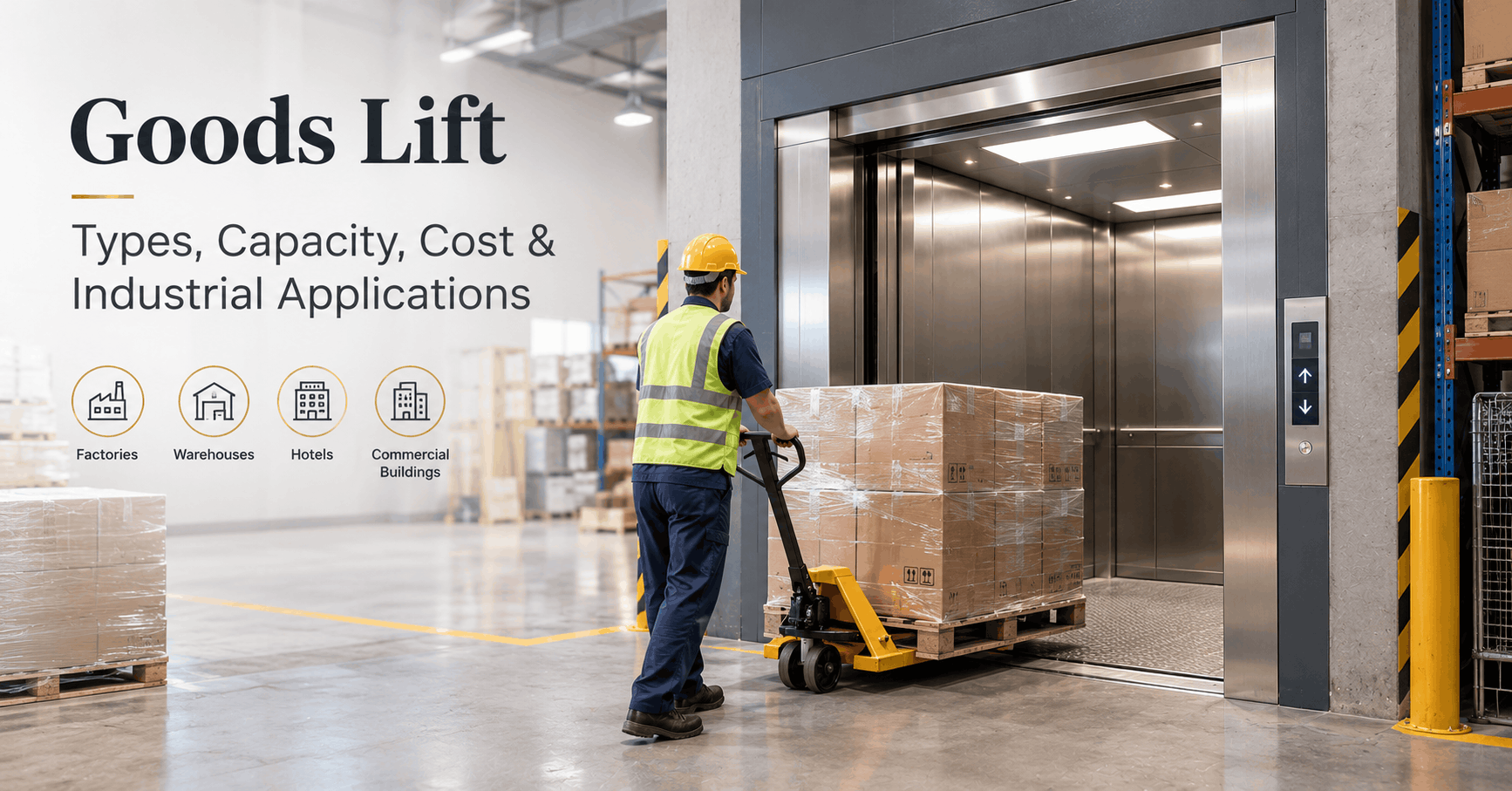
Goods Lift: Types, Capacity, Cost & Industrial Applications
Moving heavy materials between floors can be challenging for factories, warehouses, hotels, and commercial buildings. Manual material handling takes time, increases labour requirements, and can create safety risks. A Goods Lift helps move goods efficiently between different levels, making daily operations smoother and more organised.
However, choosing the right lift depends on the type of materials, load requirements, available space, and frequency of use. Exploring suitable goods elevator solutions can help businesses understand the available options and identify the features required for their operations. This guide explains goods lift types, capacity considerations, cost factors, safety features, and common industrial applications.
What Is a Goods Lift and How Does It Work?
A goods lift is designed to make the movement of materials between different levels easier and more efficient. Unlike a standard passenger elevator, its primary purpose is material handling rather than transporting people.
A Goods Elevator typically consists of a lifting platform or cabin, guide rails, a drive mechanism, landing doors, a control system, and appropriate safety devices. The exact configuration depends on the intended load and building requirements.
For example, a manufacturing facility may need to move raw materials from a storage floor to a production area. A warehouse may need to transfer cartons, pallets, and packaged products between storage levels. A goods lift helps streamline these movements without relying entirely on manual transportation or forklifts between floors.
Force Lifts provides heavy-duty goods elevator solutions designed for material handling and logistics, with configurable cabin dimensions and reinforced construction for demanding applications. You can explore its goods elevator solutions to understand the available features.
What Are the Different Types of Goods Lifts?
The most suitable lift depends on the building's height, load requirements, available space, and frequency of operation. Not every lifting system is suitable for every industrial application.
1. Hydraulic Goods Lift
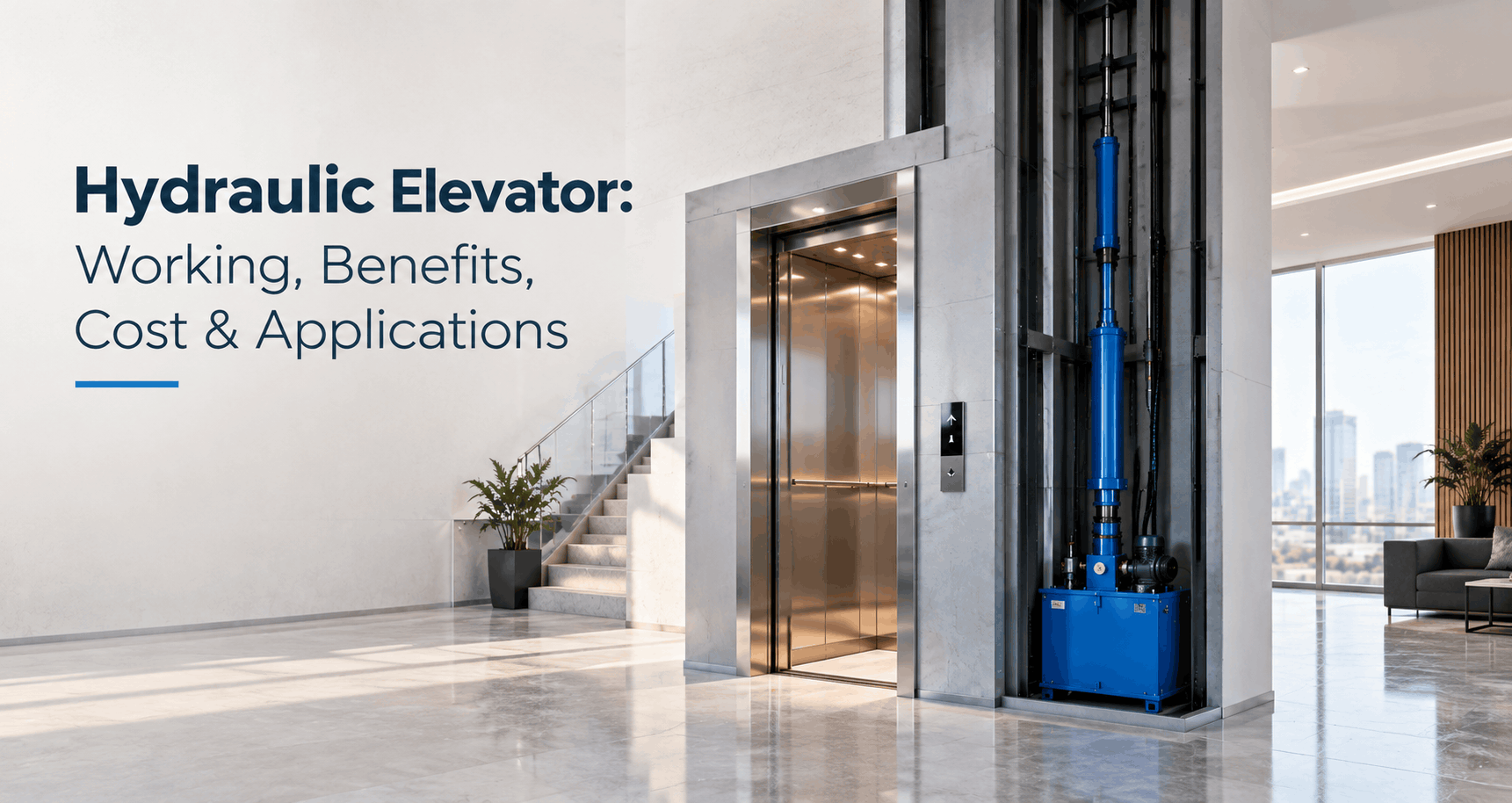
A hydraulic system uses hydraulic power to raise and lower the platform. It may be suitable for certain low-rise applications where the load, travel height, operating frequency, and site conditions match the system's capabilities.
When evaluating a hydraulic elevator, consider the intended application, platform dimensions, loading method, maintenance access, and manufacturer's technical recommendations before selecting a configuration.
2. Traction Goods Lift
A traction-based system uses a motor-driven arrangement with ropes or belts and a counterweight, depending on the design. It may be appropriate for buildings requiring longer travel distances or frequent vertical movement.
The decision between traction and hydraulic technology should be based on the application, engineering requirements, energy use, and total operating cost rather than the purchase price alone.
3. Heavy-Duty Industrial Goods Lift
An Industrial Goods Lift is designed for material-handling environments where heavy loads, repeated loading, and demanding working conditions are common.
Depending on the design, it may include reinforced steel walls, durable platform construction, anti-skid flooring, wide loading doors, and customised cabin dimensions.
These features are especially useful when handling machinery, pallets, packed goods, equipment, or industrial components.
4. Freight Lift for Commercial Facilities
A Freight Lift is generally intended for moving cargo, inventory, supplies, or other materials in commercial and industrial buildings.
Its capacity, platform size, and door arrangement must match the items being moved and the way they enter or leave the lift. Some facilities require wide openings for trolleys, while others need dimensions that accommodate bulky equipment.
Important: A goods or freight lift should not be used to carry passengers unless the particular system is specifically designed, approved, and authorised for that purpose.
How to Choose the Right Goods Lift Capacity
Choosing the correct capacity is one of the most important decisions when planning a goods lift installation. If the capacity is insufficient, the lift may not meet operational requirements. Selecting a substantially oversized system can also increase equipment and installation costs unnecessarily.
Start by identifying the heaviest load you expect to transport, including the trolley, pallet, container, or handling equipment used to move it.
Then consider:
- Maximum load: Determine the weight of the heaviest typical shipment.
- Load dimensions: Check the length, width, and height of the goods.
- Loading equipment: Account for pallet trucks, trolleys, or other handling equipment.
- Travel height: Identify the floors that need to be connected.
- Frequency of use: Estimate how often the lift will operate during busy periods.
- Future demand: Consider whether production or storage requirements may increase.
A Material Lift must be selected according to its intended working conditions, not just its advertised weight capacity.
For instance, a compact lift handling packaged cartons has different requirements from a system moving industrial machinery. The total weight may be similar, but the platform dimensions, loading arrangement, and structural demands can differ significantly.
What Is the Cost of a Goods Lift?
There is no single fixed Goods Lift Cost because each installation depends on the building and the materials being transported. A compact system for a low-rise facility will have different requirements from a heavy-duty lift serving several floors in a manufacturing plant.
The most reliable way to establish the budget is to obtain a project-specific quotation after a technical site assessment.
The main cost factors include:
- Load capacity: Higher load requirements can call for stronger platforms, reinforced components, and different drive specifications.
- Number of floors: Additional stops and greater travel height affect equipment, guide rails, doors, wiring, and installation work.
- Platform dimensions: Larger platforms for pallets, machinery, or oversized products may require additional fabrication and structural provisions.
- Lift technology: Hydraulic and traction configurations have different equipment and installation requirements.
- Door arrangement: Wide openings, specialised gates, and loading access can affect the overall design and cost.
- Site preparation: Civil modifications, shaft construction, pit requirements, and electrical work can add to the project budget.
- Installation and commissioning: Clarify whether equipment supply, installation, testing, commissioning, and documentation are included in the quotation.
When comparing suppliers, request a written cost breakdown rather than comparing headline prices. Also confirm the warranty, maintenance arrangement, applicable taxes, and any exclusions before approving the quotation.
Where Are Goods Lifts Used?
A Goods Lift for Factory applications is only one example of how vertical material handling can improve operations. Different facilities use goods lifts according to their layouts, inventory, and workflow.
Factories and Manufacturing Units
Factories use goods lifts to transport raw materials, components, production supplies, and finished products between floors. A suitably designed lift can make material movement more organised and reduce unnecessary manual handling.
Warehouses and Distribution Centres
Warehouses may need to move cartons, packaged products, pallets, and inventory between storage levels. Platform size, loading access, capacity, and operating frequency are important when selecting a system for these environments.
Retail Stores and Shopping Facilities
Commercial facilities may use goods lifts for stock movement, deliveries, and transferring supplies between storage areas and sales floors. A suitable configuration can help separate goods movement from customer circulation.
Hotels and Hospitality Facilities
Hotels may require goods lifts to move linen, housekeeping supplies, food-related materials, and other operational items. The capacity and loading configuration should reflect the facility's workflow.
Workshops and Industrial Storage
Workshops may need to transport tools, machinery components, spare parts, and equipment between working areas. A lift designed around the actual load and operating conditions can make these activities easier to manage.
What Safety Features Should a Goods Lift Have?
Safety should be a central consideration when choosing an industrial lifting system. The appropriate protection depends on the design, operating environment, loading method, and applicable requirements.
Important features to evaluate include:
- Overload protection: Helps prevent operation beyond the rated load.
- Door interlocks: Prevent unsafe operation when landing doors are not properly secured.
- Emergency stopping: Provides a means to stop the system when required.
- Appropriate braking and safety systems: Must match the lift's engineering design.
- Anti-skid platform flooring: Can help improve loading and unloading conditions.
- Accurate floor levelling: Helps align the platform with the landing for safer material movement.
- Suitable loading doors: Support the safe movement of materials into and out of the lift.
Force Lifts' goods elevator offering highlights reinforced steel construction, cargo stability, flexible freight doors, auto-levelling, and overload-related safety provisions.
Before finalising a Goods Lift, confirm which safety features are included in the proposed configuration and which inspections or approvals are required for your particular installation.
What Is Involved in Goods Lift Installation?
Installing a goods lift requires proper coordination between the building team and the elevator supplier. Planning the system after construction is complete can lead to avoidable structural changes, additional costs, and delays.
The usual process involves:
- Site inspection: Assess the building, intended load, loading access, and travel height.
- Technical planning: Finalise capacity, platform size, drive system, number of stops, and door arrangement.
- Site preparation: Complete the required shaft, pit, structural, and electrical work.
- Equipment installation: Fit the lifting mechanism, platform or cabin, rails, doors, and controls.
- Testing and commissioning: Check operation and the relevant safety systems before the lift enters service.
- Handover: Provide operating instructions and maintenance documentation as required.
The actual process and timeline depend on the system and site conditions. Force Lifts offers installation and maintenance services that cover site inspection, installation, testing, commissioning, and ongoing support.
How to Choose the Right Goods Lift Manufacturer
Selecting a supplier involves more than finding a suitable product. You need a team that can understand your application, recommend the correct configuration, and support the equipment after installation.
Before making a decision, check whether the manufacturer or supplier can provide:
- A technical site assessment.
- Clear capacity and platform specifications.
- A written installation quotation.
- Details of safety features and applicable compliance requirements.
- Testing and commissioning support.
- Preventive maintenance and repair assistance.
- Spare-parts availability and service support.
Ask for details of similar installations and how the supplier handles breakdowns and routine maintenance.
You can review completed elevator projects to understand the types of installations a supplier has handled. The most suitable option is the one that meets your actual material-handling requirements and offers dependable support throughout its service life.
Common Mistakes to Avoid When Buying a Goods Lift
Some purchasing mistakes become expensive because they are made before the technical requirements are properly defined.
Avoid the following:
- Choosing capacity without understanding the load: Include the weight of trolleys, pallets, and handling equipment where applicable.
- Ignoring platform dimensions: A lift may have enough weight capacity but still be unsuitable for bulky or awkwardly shaped goods.
- Overlooking loading access: Door width, approach space, and alignment with loading areas can affect day-to-day operations.
- Comparing prices without matching specifications: Two quotations may cover different capacities, components, installation work, or maintenance support.
- Delaying site planning: Confirm shaft, pit, structural, and electrical requirements before the relevant construction work is completed.
- Ignoring future operating needs: Consider anticipated changes in production, stock volume, and daily lift usage.
A well-planned purchase considers the complete material-handling process rather than only the initial equipment cost.
Conclusion
Choosing the right Goods Lift starts with understanding the load, platform dimensions, travel height, operating frequency, safety requirements, and installation conditions. These factors influence the lift's performance, initial cost, maintenance needs, and suitability for your facility. A properly specified system can make vertical material handling more organised and efficient.
Before investing in a Goods Lift for Factory or commercial use, arrange a technical site assessment and compare quotations on the same specifications. Check the safety systems, installation scope, commissioning process, and after-sales support before making your decision. The right lift should meet your current operational needs while remaining suitable for the demands of your business.